.png)
Call Us 24/7/365
+1 (818) 600-0008AEEM Shipping moves Korean freight end to end. Ocean out of Busan, air out of Incheon,
customs coordinated through licensed partners, and same-day drayage the moment your
container hits San Pedro Bay. One contact, origin to your door.
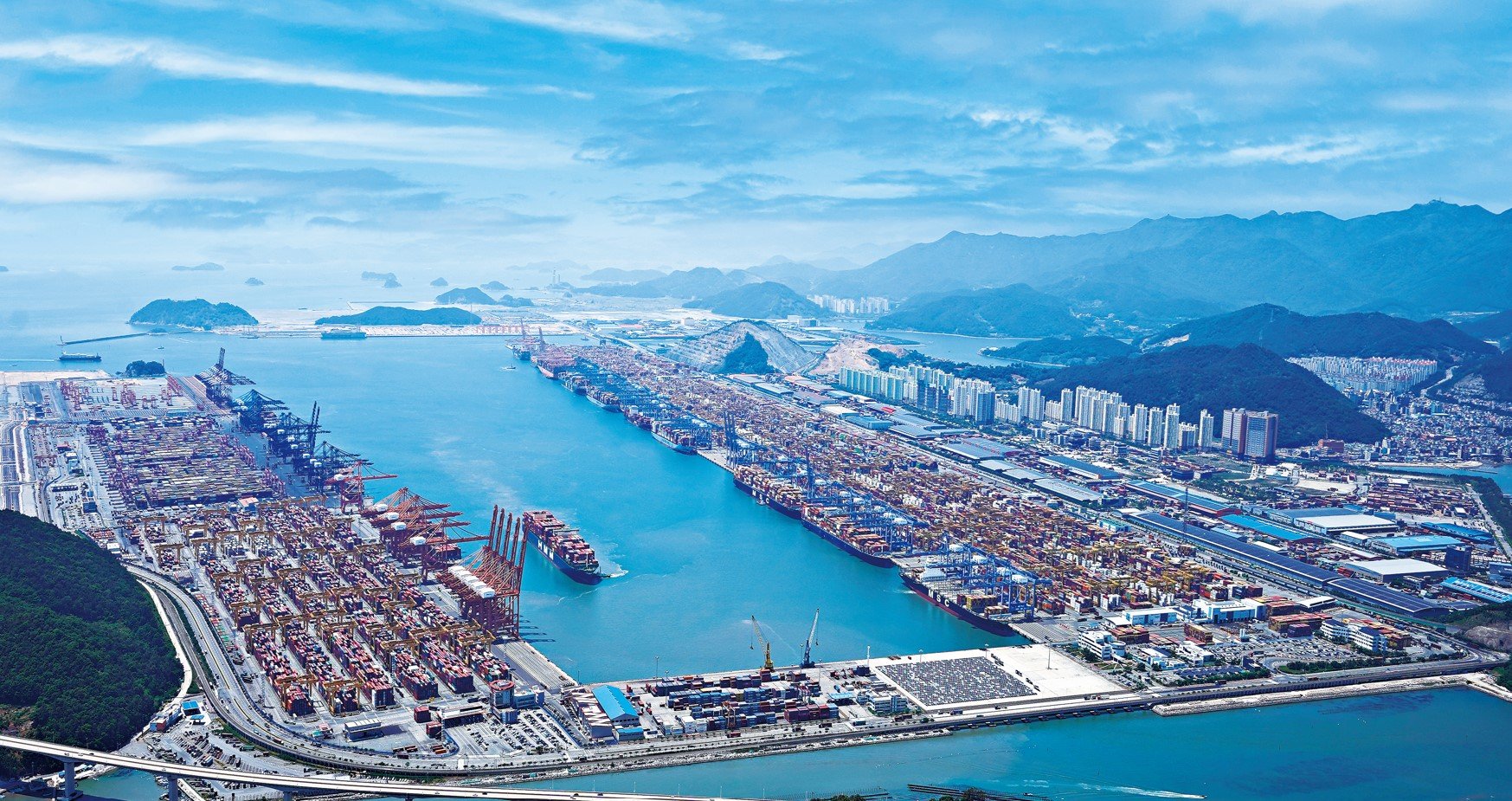
South Korea is one of the largest U.S. trading partners, with $142.5 billion in U.S. imports in 2025. Nearly all of it funnels through two gateways. Busan handled 24.8 million TEU in 2025 and ranks as the world's second largest transshipment port after Singapore, with express strings that put a container in Long Beach in as few as 11 days. Incheon International Airport moves roughly 2.95 million tonnes of cargo a year, placing it among the top three air cargo hubs on the planet. Sailings depart Busan for San Pedro Bay nearly every day across HMM, ONE, and the major alliances, which makes Korea one of the deepest, most flexible lanes on the transpacific.
AEEM runs the lane end to end. We book your FCL or LCL space out of Busan or Incheon, coordinate customs clearance while your cargo is still on the water, and dispatch same-day drayage at every San Pedro Bay terminal the moment your container discharges. KORUS paperwork, ISF, arrival appointments, chassis, final delivery. One contact, 24/7 dispatch and live support, no handoffs between vendors who have never spoken to each other.
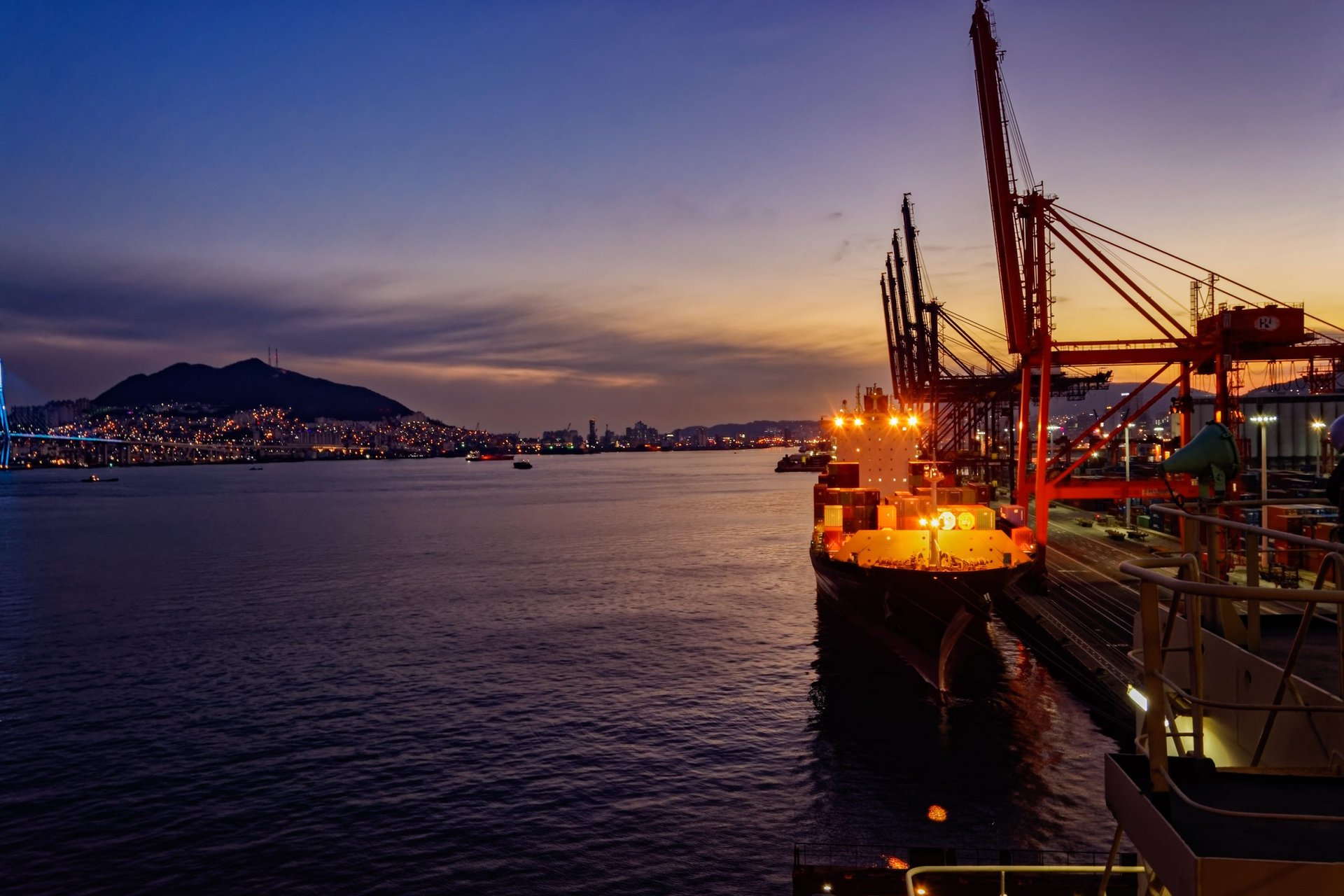
Ocean out of Busan, air out of Incheon, cleared through licensed customs partners, and delivered off the docks at LA and Long Beach. Four services, one dispatch line.
.svg)
FCL and LCL bookings on the Busan to San Pedro Bay lane across HMM, ONE, and the major alliances. Express strings when speed pays, standard weekly rotations when it does not.
Learn More ➔.svg)
Same-day drayage at every LA and Long Beach terminal. Appointments booked off the vessel ETA, chassis secured in advance, pre-pull before free time burns.
Learn More ➔.svg)
TSA and IAC certified air cargo out of Incheon, one of the world's top three cargo hubs. Semiconductors, electronics, K-beauty launches, anything that cannot wait two weeks on the water.
Learn More ➔
Entry filing, KORUS claims, and FDA requirements coordinated through licensed partners while your cargo is still on the water. Cleared before the ship ties up, not after.
Learn More ➔
Korea runs one of the fastest express lanes on the transpacific: 11 days port to port from Busan to Long Beach on HMM's dedicated express string, 12 to 16 on the standard weekly rotations. The cargo skews high-value and regulated. Semiconductors, consumer electronics, auto parts feeding Hyundai and Kia's U.S. plants, EV battery cells, and the fastest-growing corner of the lane, K-beauty and Korean food, where FDA registration and prior notice decide whether the shipment clears or sits. Korea also ships with an edge Japan lacks: under the KORUS free trade agreement, most Korean-origin goods enter the U.S. duty free, but only with a valid certification of origin behind the claim.
The clock starts in Busan, not Long Beach. Korean container yards close their cutoffs days before sailing, and ISF must be accepted by U.S. customs at least 24 hours before your container is loaded, so a late document at origin costs you the next sailing, not the next afternoon. And an 11-day crossing means nothing if the box sits at a San Pedro Bay terminal burning free time. We book delivery appointments off the vessel ETA, keep chassis lined up, pre-pull when free time runs short, and build the KORUS and FDA paperwork into the booking instead of scrambling at arrival. The lane rewards operators who work both ends.
The questions importers actually ask about the Korea to U.S. lane, answered by the team that runs it.
Ocean freight from Busan to Long Beach runs as fast as 11 days port to port on express services, with most standard weekly rotations landing in 12 to 16 days. Air freight from Incheon to LAX moves in 1 to 3 days airport to airport. Door-to-door time adds origin cutoffs before sailing and customs release, terminal appointment, and drayage after discharge, which is where a forwarder with arrival-side operations at LA and Long Beach earns its keep.
Rates move constantly, so any number printed on a page is stale by the time you read it. What actually drives your cost: spot versus contract pricing, the season (August through October peak runs highest), fuel and terminal surcharges, chassis and drayage at destination, exam fees if CBP flags the entry, and demurrage or detention if the box overstays free time. The last two are the silent killers, and they are the ones we control hardest. Request a quote and we price your specific lane, commodity, and volume the same day.
FCL gives you the whole container, faster terminal handling, and no co-loaded cargo risk, and it usually wins on cost somewhere around 13 to 15 cubic meters. LCL lets you move smaller volumes on the same near-daily Busan sailings without paying for empty space, at the cost of consolidation time on both ends. High-value Korean cargo like electronics and battery materials often justifies FCL below the usual break-even purely on handling risk. We run the math on your actual volumes before you book.
Busan handles the overwhelming majority of U.S.-bound ocean freight and is the world's second largest transshipment port, so cargo from across Asia consolidates there too. Gwangyang is the secondary container gateway, and Incheon's seaport serves the Seoul metro area. For air, Incheon International Airport is the country's cargo hub and one of the top three in the world by volume, with dense freighter and belly capacity into LAX.
Often no, and that is Korea's biggest advantage over non-FTA origins. KORUS has been in force since 2012 and most Korean-origin industrial and consumer goods enter the U.S. duty free with a valid claim. Qualifying takes two things: the goods must meet KORUS rules of origin, and the claim needs a certification of origin from the importer, exporter, or producer. Some sectors also carry separate U.S. tariff actions layered on top of KORUS, so the final duty picture depends on your exact HTS classification. Our licensed customs partners verify eligibility and current rates for your specific product before entry, not after.
Your box discharges at a San Pedro Bay terminal and the free-time clock starts. If the work was done right, customs release is already in hand, a delivery appointment is booked off the vessel ETA, and a chassis is waiting. We pull the container, deliver it to your door or warehouse, and return the empty before detention accrues. If free time gets tight, we pre-pull to our network and stage the delivery. Arrival-side drayage at LA and Long Beach is the core of what AEEM does, and it is exactly the stretch where most Korea shipments lose the time the fast crossing saved.