.png)
Call Us 24/7/365
+1 (818) 600-0008AEEM Shipping runs container drayage and port-to-door freight out of every Port of
Los Angeles terminal, from APM's Pier 400 to West Basin. We track your Last Free Day,
book the appointments, and get your can out before the charges start.
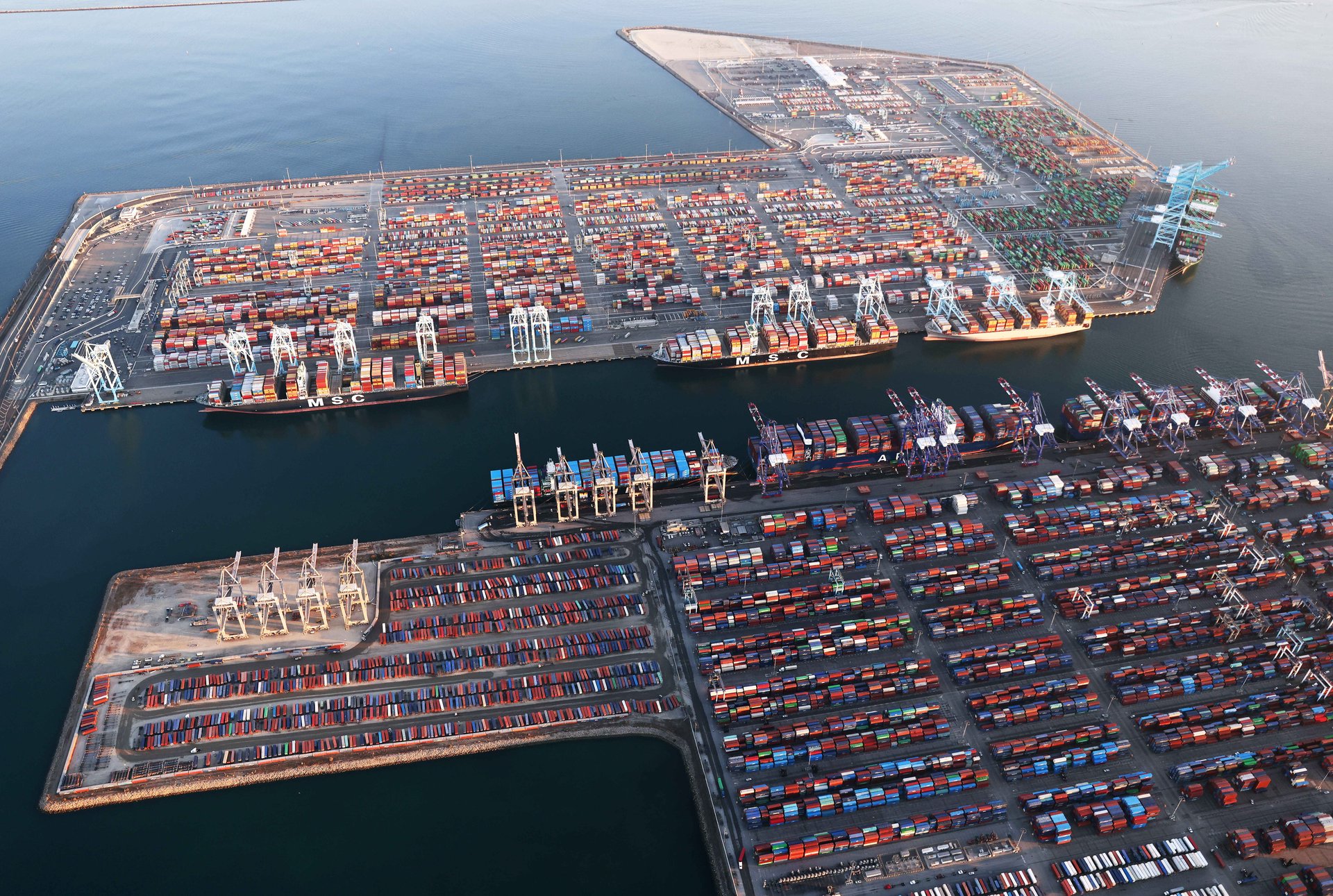
The Port of Los Angeles anchors the San Pedro Bay complex alongside Long Beach, and together the two ports handle roughly one third of all U.S. containerized waterborne trade. Los Angeles runs seven major container terminals across six facilities, six intermodal rail yards, and direct access to the Alameda Corridor, the 20 mile express railway connecting the docks to the national rail network in downtown Los Angeles.
That scale cuts both ways. LA's terminals run three different appointment systems, publish berth assignments most importers never read, and fill their slots fast on peak vessel days. AEEM dispatches to every terminal daily from our Burbank headquarters. We know which gate runs TERMPoint instead of eModal, which terminal turns trucks fastest, and how to get your box out before the free time clock runs down.
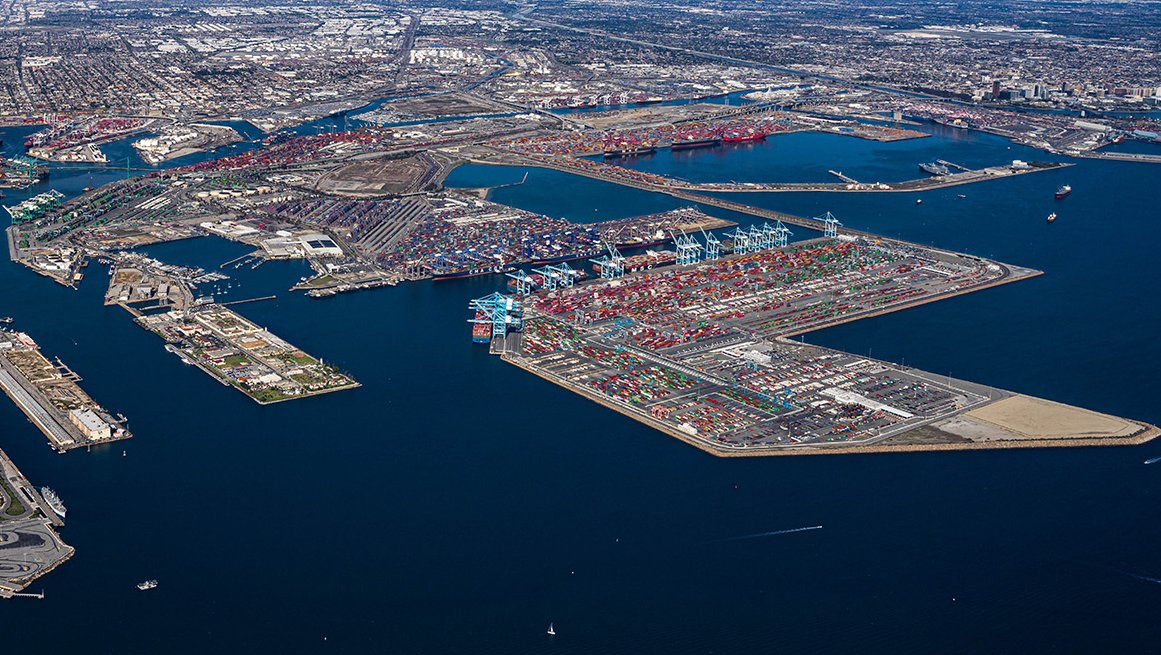
Every Los Angeles terminal runs its own appointment system, gate procedure, and operational quirks. Here is where your container actually lands

Berths 401 - 406. The largest container terminal in the Western Hemisphere and the primary Maersk gateway. The fastest rail turn in SoCal: 12 working tracks plus 6 storage tracks moving 1,100 FEUs per day on BNSF and UP, with eastbound dwell under two days. Import and export appointments schedulable simultaneously.

Berths 302 - 305. CMA CGM owned and the main Ocean Alliance call on the LA side of the bay. Four berths and 16 cranes, 8 of them sized for ultra-large vessels. Deep water access and a high volume gate that rewards early appointment booking on peak discharge days.
.svg)
Berths 136 -147. One of the most automated terminals in the complex, operated by a Mitsui O.S.K. Lines subsidiary with automated stacking and optical gate processing. Consistently among the fastest truck turn times at the port when appointments line up.

Berths 212 - 225. NYK affiliated and a primary ONE and Premier Alliance call, with on-dock rail and shore power at berth. A steady mid-size gate with reliable dual transaction flow that lets dispatch pair an empty return with a loaded pull in one trip.
.svg)
Berths 226 - 236. Evergreen affiliated, handling Evergreen and partner services on Asia lanes. A compact footprint means quick in-terminal moves, but slot supply tightens fast when big vessels discharge, so early booking matters here more than anywhere.

Berths 100 - 126. Two operations on one footprint: the China Shipping berths serving COSCO services and the WBCT side serving Yang Ming and ZIM. Nearly 300 acres with four berths, running Voyager Track for appointments, and the closest terminal to the Vincent Thomas Bridge and the 110 freeway.
The port publishes its berth assignments terminal by terminal, C2 through C7 on the official facilities map, and AEEM dispatch works from those assignments daily. Appointment systems are the operational difference at LA: TERMPoint at APM, Voyager Track at WBCT, and eModal across the rest. A dispatcher who only knows one system loses hours at the other two. Six intermodal rail yards and the Alameda Corridor connect every terminal to the national rail network, which is why LA is the stronger origin for inland point intermodal moves to Chicago, Dallas, and Memphis when on-dock rail timing lines up.
Four services cover the full import chain at the Port of Los Angeles: drayage off the terminal, customs cleared before arrival, ocean freight booked at origin, and warehousing when your dock is not ready.

Container drayage at every Port of Long Beach and Port of Los Angeles terminal, dispatched daily from Los Angeles. We track your Last Free Day, book the terminal appointments, and deliver port-to-door anywhere in Southern California.
Learn more ➔
Customs clearance coordination for imports through the Ports of Long Beach and LA. Entry filing, ISF, and duty payment are handled through licensed customs broker partners and timed to vessel arrival so cleared cargo never waits on paperwork.
Learn more ➔
Ocean freight from Asia to Los Angeles and Long Beach, FCL and LCL, on the Transpacific lanes we run daily. Vessel tracking from origin port to berth means your drayage plan is set before the container discharges.
Learn more ➔
Warehousing, transloading, and cross-dock at Los Angeles and Inland Empire facilities near the ports. Pre-pulls and secure container storage stop the demurrage clock when your dock can't receive before the Last Free Day.
Learn more ➔Import free time at Los Angeles starts after your container comes off the vessel. Published free time typically runs four to seven calendar days depending on the terminal and steamship line tariff, but the operational window is usually shorter. Free time runs under the Port of Los Angeles tariff and your steamship line's terms, and weekends count against the clock. Appointment scarcity, terminal congestion, and customs or carrier holds all eat days you thought you had.
Once the Last Free Day passes, demurrage begins, typically $150 to $300 or more per container per day on an escalating tier, with rates set by the steamship line rather than the terminal. The tiers climb fast: the first few days past LFD bill at the base rate, then jump to $300, $400, and beyond as the container sits. A single box left five days past LFD can quietly run over $1,000, and on a ten container shipment that becomes a five figure invoice for cargo that already paid ocean freight.
Detention and per diem charges stack on top after the box leaves the terminal. Detention applies when the empty container is not returned to the carrier within its free days, and per diem accrues on the chassis for every day it stays under the box. These run on separate clocks from demurrage, so one delayed delivery can trigger all three at once. Reefer containers carry higher rates on every tier, plus plug fees while they sit powered at the terminal.
Since late 2025, carriers can again bill demurrage and detention to a wider set of parties after the FMC's billing rule was struck down, which means importers see these invoices directly more often than they did a year ago. The only reliable defense has not changed: get the container off the dock before the Last Free Day, and return the empty inside its window.
Our standard playbook: we track the vessel before arrival, monitor the container status until it flips to available, book the earliest appointment, and pull the box within the free time window. When delivery timing doesn't line up, we pre-pull to a local yard and stage the container, which stops the terminal clock entirely. Cheap yard storage always beats demurrage.
A Los Angeles–based drayage network built for speed, compliance, and visibility, from reefer cargo to overweight loads.
.svg)
Based at the Ports of Los Angeles and Long Beach with daily terminal runs, plus vetted capacity at Oakland, Houston, New York/New Jersey, and every other major U.S. port.
.svg)
Our operations team monitors every move, day or night, through digital dispatch and live tracking dashboards.
.svg)
Every quote includes fuel, chassis, and accessorial fees upfront. No hidden charges, no post-delivery surprises.
.svg)
Follow every container from terminal gate-out to final delivery with live status updates and automated ETA alerts.
.svg)
Our certified network handles hazardous, temperature-sensitive, and overweight freight under DOT and port compliance standards.
.svg)
Secure yard storage near the ports and pre-pull services help you avoid demurrage and detention fees when warehouse doors are full.
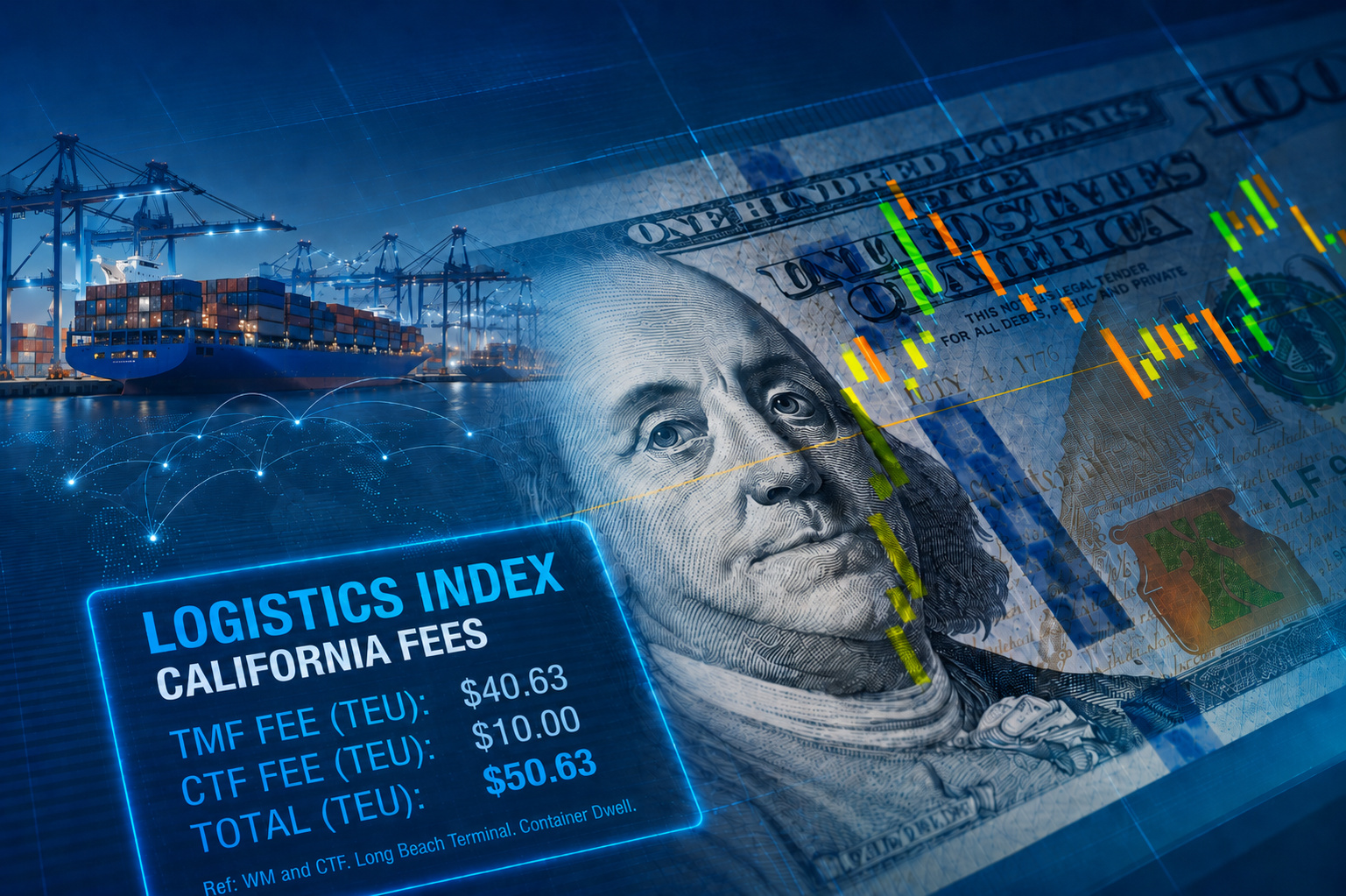
Two port-specific fees apply to nearly every loaded container at Los Angeles. Both are billed per container and both change, so stale numbers cost real money.
Traffic Mitigation Fee (TMF). Effective August 1, 2026, the TMF is $40.63 per TEU and $81.26 for all larger containers, a 4.77 percent increase set by the West Coast MTO Agreement to match longshore wage increases. The TMF funds the OffPeak program's night and weekend gates. Exempt: empty containers, cargo transiting the Alameda Corridor in a container subject to ACTA fees, transshipment cargo, empty chassis, and bobtail trucks. The fee posts as a hold against the container and must clear through the PierPass portal before pickup.
Clean Truck Fund (CTF) Rate. $10 per loaded TEU and $20 for larger containers when hauled by a conventional drayage truck. Zero-emission trucks are permanently exempt. Eligible low-NOx trucks hold a temporary exemption through December 31, 2027. The CTF is collected through PortCheck and funds the port's transition to a zero-emission drayage fleet by 2035.
Compliance underneath both fees: every drayage truck entering a Los Angeles terminal must be enrolled in the Port Drayage Truck Registry and compliant with the CARB Drayage Truck Regulation. A non-registered truck cannot clear the gate. Every carrier in AEEM's network is PDTR-registered and CARB-compliant before a load is ever tendered. Fee data on this page is verified against WCMTOA and port tariff publications and updated each August when rates adjust.
Chassis is the most underestimated cost line in Los Angeles drayage. San Pedro Bay primarily runs on the shared Pool of Pools among the major intermodal equipment providers, which simplifies on-dock access but does not guarantee equipment availability or quality at every terminal every day. Under the Ocean Shipping Reform Act, carriers and shippers can exercise chassis choice and select the provider when the cargo interest pays.
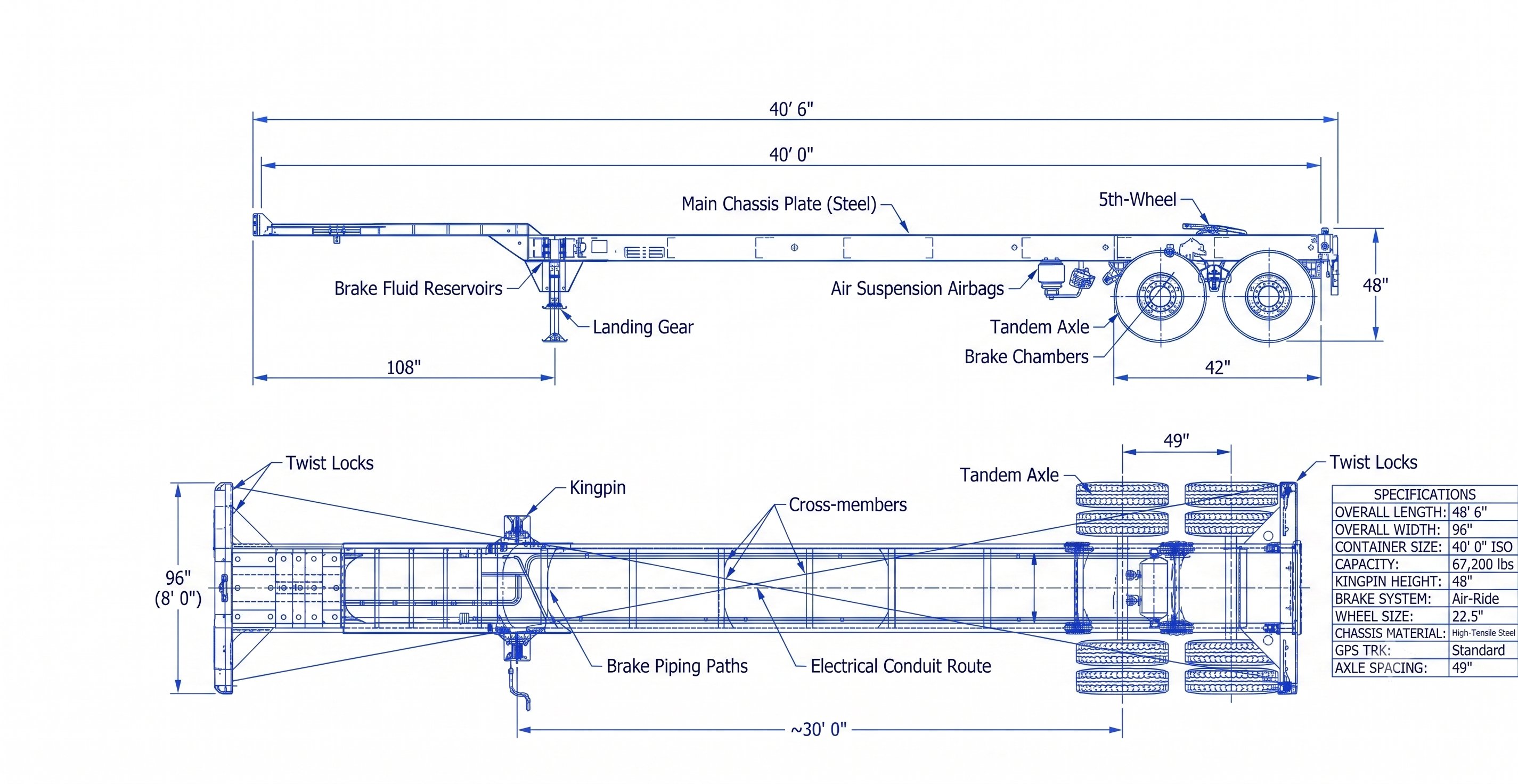
Matching the right chassis to the load matters as much as finding one. Standard 20 foot and 40 foot chassis cover most dry container moves. When a container runs above legal road weight, typically past 44,000 pounds of cargo in a 20 foot box or 44,500 in a 40 foot, it needs a tri axle chassis to distribute the load legally, in both 20 foot and 40 foot configurations. Heavy 20 footers are the usual offenders, since dense cargo like tile, metal, and machinery hits the weight ceiling long before the box is full. Booking the tri axle before the container discharges avoids the scramble that turns an overweight pull into a missed appointment and a demurrage day.
AEEM manages chassis sourcing as part of the move: we confirm availability before dispatch, match standard or tri axle equipment to the manifest weight, use carrier-owned chassis where it protects the schedule, and flag chassis splits before they turn into a second truck trip on your invoice.
Straight answers on drayage, trucking, and warehousing across the Port of Los Angeles
As of August 1, 2026, the Traffic Mitigation Fee is $40.63 per TEU and $81.26 for all larger container sizes, set by the West Coast MTO Agreement, and it applies identically at Los Angeles and Long Beach. Empty containers, Alameda Corridor rail cargo, transshipment cargo, empty chassis, and bobtails are exempt. The fee must be paid through the PierPass portal before the container can be picked up.
The Clean Truck Fund Rate is $10 per loaded TEU and $20 for containers larger than 20 feet when hauled by a conventional drayage truck. Zero-emission trucks are permanently exempt, and eligible low-NOx trucks are exempt through December 31, 2027. The fee is collected through PortCheck.
Local drayage from the Port of Los Angeles to most Los Angeles and Inland Empire destinations typically runs $400 to $950 per container, depending on distance, chassis, and terminal conditions. The variables that move the price: delivery mileage, chassis fees and splits, overweight loads requiring a tri-axle chassis, port fees like the TMF and CTF, and pre-pull or yard storage when delivery timing doesn't line up.
AEEM's customs clearance rates at the Port of Los Angeles: $80 per customs entry, $40 for ISF filing, $50 for a single-entry bond, or $500 per year for a continuous bond covering unlimited entries, plus a flat administrative fee per shipment. Import duties and tariffs are separate and depend on the commodity's HTS classification. AEEM coordinates clearance alongside drayage, so cargo is released and moving the day it discharges.
Seven major container terminals across six facilities: APM Terminals Pacific at Pier 400, Fenix Marine Services at Pier 300, TraPac, Yusen Terminals, Everport Terminal Services, and West Basin Container Terminal, listed by the port as WBCT China Shipping and WBCT LA TiL. AEEM dispatches to all of them.
Three different systems: APM Terminals runs TERMPoint, West Basin runs Voyager Track, and TraPac, Yusen, Everport, and Fenix run eModal. Each system has its own booking windows and slot release patterns, and AEEM dispatch works all three daily.
Published free time typically runs four to seven calendar days depending on the terminal and steamship line tariff, starting after the container is discharged from the vessel, and weekends count against the clock. The practical window is often shorter once appointment availability and holds are factored in, which is why AEEM tracks the Last Free Day from the moment the vessel berths.
Your steamship line and service string decide which port your vessel calls, not you, so the practical question is whether your drayage provider covers both sides of the bay equally. AEEM dispatches to all Los Angeles and Long Beach terminals daily, so the answer is the same either way: we pull the box wherever it lands.