.png)
Freight Shipping Between
Los Angeles and New Jersey
FTL, Drayage & Port-to-Door Freight
Five days between the two transload capitals of American freight, and we work both ends:
San Pedro Bay on our own network, the Newark-Elizabeth corridor through established partners on yours.
Los Angeles to Texas freight, handled end to end
New Jersey is the only state whose freight geography is spoken in exit numbers. Say 8A to anyone in logistics and they picture the same thing: the mega-DC universe around Cranbury and Monroe where the turnpike meets the container flow off Port Newark and Elizabeth. The state is the East Coast's mirror of the Inland Empire, a transload and distribution engine serving the densest consumer market in the country, and its second economy is just as distinctive: the nation's pharmaceutical corridor runs through New Jersey, and pharma freight brings receiving standards, temperature documentation and chain-of-custody paperwork, that ordinary dry vans never meet.
AEEM Shipping works both ends of the lane: transload at the San Pedro Bay complex westbound, established partner facilities in the Newark-Elizabeth port corridor eastbound, so freight originating in New Jersey rides the same file back to Los Angeles. FTL crosses five days solo, under three on team, drop-trailer programs serve the DCs that live on them, pharma loads carry the documentation their docks demand, and winter routing swings south off I-80 before the storm closes it. One team, one tracking thread, 24/7 dispatch.

Freight services between Los Angeles and New Jersey
Booked, dispatched, and delivered by one team.

FTL
Full truckload service between Southern California and every New Jersey market, dispatched daily with real-time tracking. Five days solo coast to coast, under three on team, with drop-trailer programs for the DCs that run on them.
Learn More ➔.svg)
Port Drayage
Container drayage at every San Pedro Bay terminal on our own network, with port-side capability in the Newark-Elizabeth corridor through established partners, so a bicoastal container program runs one playbook.
Learn More ➔
Transloading & Warehousing
Transload at both ends of the lane: San Pedro Bay on our own ground, the Newark-Elizabeth corridor through established partner facilities. One transload capital feeding the other, one file covering both.
Learn More ➔
Customs Clearance
Entry filing, ISF, and duty work handled by licensed customs brokers as part of the file, so a container clearing at either coast keeps moving instead of waiting on a third vendor.
Learn More ➔The Los Angeles to New Jersey corridor
The routing is the classic transcon: I-15 out of the basin to I-80, then twenty-five hundred miles of the American interior ending on I-80's final approach into North Jersey. Winter is the variable, because Wyoming's wind closures and Pennsylvania's ridge weather both live on this road, and the southern alternative through I-40 and I-81 exists for exactly those weeks. Solo drivers cross in five days, teams in under three, and the difference between a good week and a bad one on this lane is usually decided by whichever dispatcher checked the Wyoming forecast first.
Delivery in New Jersey is organized, dense, and unforgiving of improvisation. The 8A cluster and the turnpike corridor run appointment-only mega-DCs where a missed window means rescheduling into next week, the port-adjacent districts around Newark and Elizabeth mix container traffic with local delivery all day, and the pharma docks across the middle of the state receive against documentation standards, temperature logs, chain-of-custody, seal integrity, that get freight rejected when they're missing. We dispatch the state as home territory: windows booked off real transit, paperwork prepared to the receiving standard, drop trailers positioned where the program calls for them.
Exit 8A / Cranbury · Newark · Elizabeth · Edison · Secaucus · South Jersey / Philadelphia metro
Importing to New Jersey through Los Angeles
New Jersey imports read like its two economies. Pharmaceutical ingredients and finished generics arrive from India, machinery and chemical inputs from Germany, and consumer goods and e-commerce volume from China, and while plenty of it sails straight into the port next door, a meaningful share lands at Los Angeles and Long Beach first and rides the transcon east. We handle the ocean leg, the port work, and the linehaul as one file.
The honest math, given that Port Newark and Elizabeth sit inside the state: all-water services from Asia take four to five weeks and suit heavy, steady, calendar-proof freight, and for that profile the home port wins. The western routing earns its miles when time is inventory, two weeks on the water to San Pedro Bay plus a five-day transcon beats the all-water box by two weeks, and when programs split inventory between coasts and need one accountable operator running both halves. The lane pays westbound too: New Jersey-origin freight transloads at our partner facilities and rides the backhaul to Los Angeles at economics the eastbound headhaul makes possible. That full program, ocean freight, customs coordination, drayage, transload, and final delivery under one contract, is our door-to-door service.

Los Angeles to Newark freight
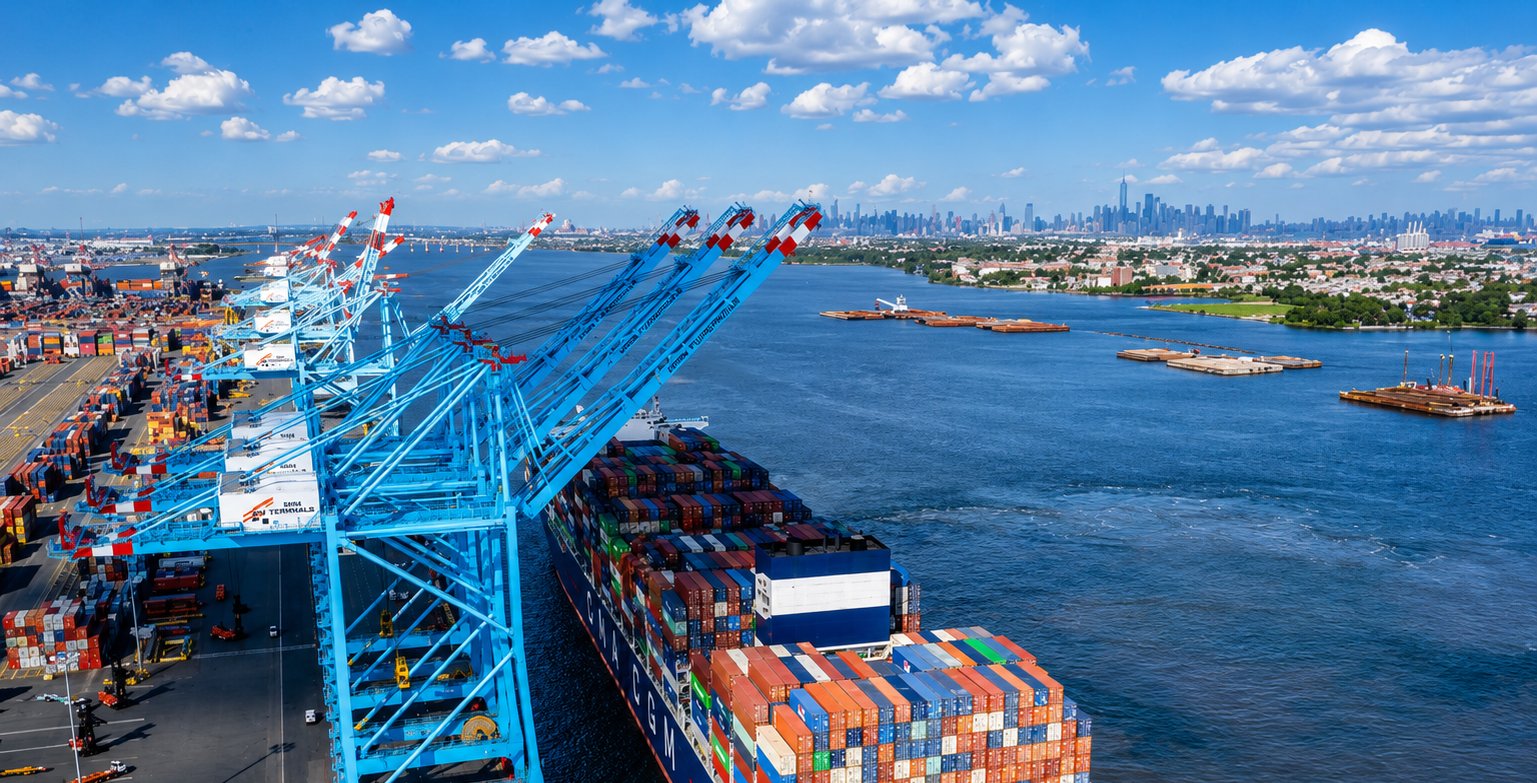
Newark is the working end of the New Jersey story: the container cranes at Port Newark and Elizabeth, the Doremus Avenue industrial corridor, the Meadowlands warehouse belt through Kearny and Secaucus staging freight for the entire metro. Much of what New York City consumes actually receives here first, on the Jersey side, where full-size equipment is legal and docks exist in numbers.
Our partner transload facilities sit in this corridor, which makes Newark the eastern anchor of the file: transcon freight arrives, breaks down or stages, and delivers into the metro on the equipment each address allows. Five days solo from the basin, under three on team, air cargo through the adjacent airport for the pharma and high-value freight, and the westbound leg loads here for Los Angeles at backhaul economics.
Los Angeles to New Jersey freight: questions we get every day.
Transit times, rates, and what the lane actually requires.
FTL runs five days solo and under three on team service. LTL runs seven to eight days depending on consolidation. Air freight into Newark covers the pharma and launch freight that cannot wait for the road.
The transcon east is a headhaul, and New Jersey's density keeps delivery efficient once the truck arrives. Rates move with fuel, season, equipment, and winter routing risk. Send the load specs and we return a real all-in quote, with drop-trailer program pricing when the volume supports it.
The home port wins for heavy, steady, calendar-proof programs arriving all-water in four to five weeks. Los Angeles wins when time is inventory: about two weeks on the water plus a five-day transcon lands goods while the all-water box is still sailing, and split-inventory programs feeding both coasts get one operator accountable for both halves. We run the western side and say so plainly when your freight belongs on the eastern one.
Yes. Pharma docks in New Jersey receive against temperature logs, chain-of-custody documentation, and seal integrity checks, and freight missing any of them gets refused, not forgiven. Our pharma loads dispatch with the documentation package built to the receiver's standard, reefer download capability where the product requires it, and appointments booked to the minute the dock expects.
Yes, where the volume supports them. The turnpike mega-DCs run on drop-and-hook economics, and steady programs earn positioned trailers that turn live unloads into yard moves. For everyone else, we book appointment windows off real transit times, because a missed 8A appointment reschedules into next week, not tomorrow morning.
Yes, and the economics favor you: the transcon headhaul runs east, so westbound trucks price as backhaul. Freight originating in New Jersey transloads at established partner facilities in the Newark-Elizabeth corridor when it needs consolidation, then rides the same file, the same tracking, and the same team to Los Angeles. Bicoastal programs run both directions under one contract.