.png)
Freight Shipping Between
Los Angeles and Maryland
FTL, Team Service & Corridor Freight
Five days to the Baltimore-Washington corridor, where a national-leading harbor,
the federal orbit, and the Delmarva shore pack three freight worlds into one small state.
.jpg)
Los Angeles to Maryland freight, handled end to end
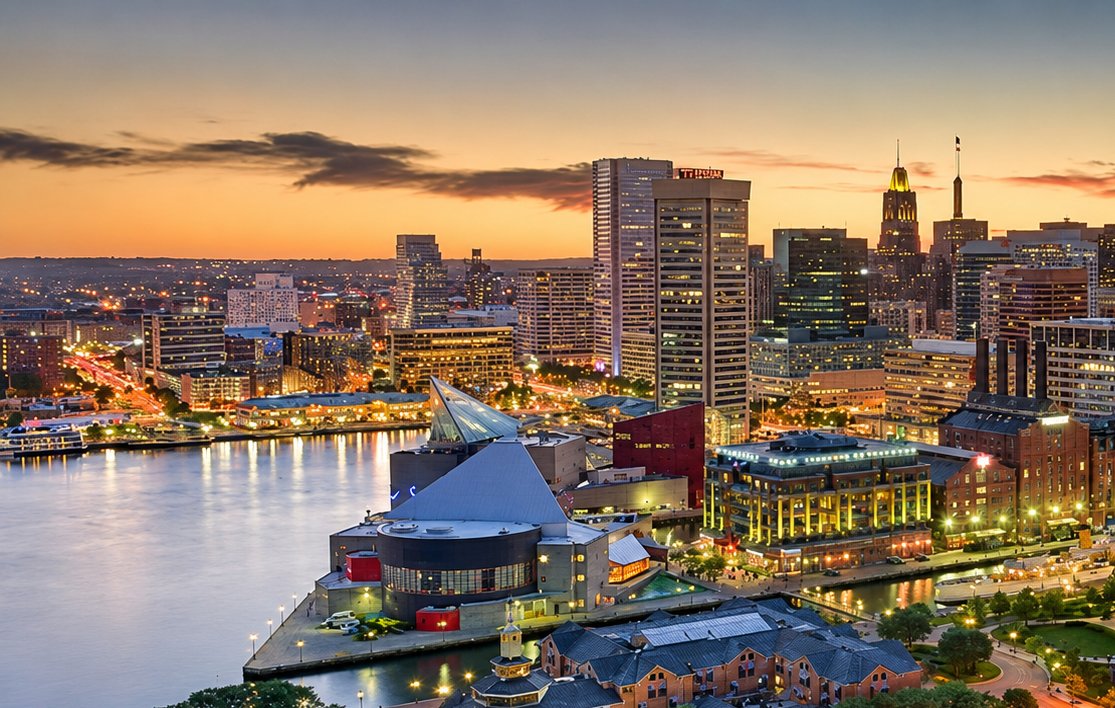
Maryland concentrates its freight along one corridor and one shore: the Baltimore-Washington belt runs the port city's industrial base, the BWI-anchored distribution ring, and the federal orbit's precision receiving, while the Eastern Shore runs the Delmarva economy of poultry and agriculture on its own bridge-crossing rhythm. Baltimore's harbor leads the country in autos and wheeled cargo, which shapes the honest routing conversation.
AEEM Shipping runs the lane at five days FTL, under three on team, flatbed for the machinery and steel, and transload at San Pedro Bay when the freight starts as an import. One team, one tracking thread, 24/7 dispatch.
Freight services between Los Angeles and Maryland
Booked, dispatched, and delivered by one team.

Full Truckload
Full truckload service between Southern California and every Maryland market, dispatched daily with real-time tracking. Five days to Baltimore and the corridor.
Learn More ➔
Team Drivers - Expedited
Driver teams crossing in under three days for the resets, launches, and federal-orbit dates where the window is the whole point.
Learn More ➔.svg)
Transloading & Warehousing
Transload and warehousing at the San Pedro Bay complex: your import lands in Los Angeles, breaks down, and rides the corridor east the same week.
Learn More ➔
Flatbed & Step-Deck
Flatbed and step-deck for the machinery, steel, and harbor-industrial freight of the Baltimore base, tarped and secured to spec.
Learn More ➔The Maryland lane and the imports that ride it

The routing runs the transcon east and finishes on I-70 into Baltimore at 2,660 miles, with the Washington-orbit suburbs off I-270 and I-95 and the Eastern Shore across the Bay Bridge on Delmarva timing. Delivery follows the split: harbor-industrial docks and the BWI distribution ring on metro appointment discipline, federal-orbit receivers whose paperwork means it, and Shore poultry and ag docks on temperature-verified receiving.
The import bill is corridor inventory: consumer goods and components from China and machinery from Germany, landing at San Pedro Bay and crossing in five days for the speed cases, while Baltimore's own docks lead the country in autos and wheeled cargo and the eastern gateways next door take the steady programs. We quote it honestly and run the winner on one file.
Baltimore · BWI corridor / Columbia · Washington-orbit suburbs · Frederick · Hagerstown · Salisbury / Eastern Shore
Los Angeles to Maryland freight: questions we get every day.
Transit times, rates, and what the lane actually requires.
FTL runs five days to Baltimore and the Washington-orbit suburbs, with team service crossing in under three. One truck typically covers the state's central corridor in a single delivery day.
Eastbound is the headhaul, and Maryland's position inside the I-95 corridor keeps return legs alive better than most of the seaboard. Rates move with fuel, season, and equipment. Send the load specs and we return a real all-in quote.
Baltimore's own docks are national leaders in autos and wheeled cargo, and steady all-water programs belong on the eastern gateways next door. Los Angeles wins the speed cases for Asia-origin freight, roughly two weeks faster door to door, plus split-inventory and multi-state programs that want one operator, and we say so when the home harbor wins instead.
Honestly, yes, because they are different freight worlds: the Baltimore-Washington corridor runs metro appointment discipline, federal-orbit receiving, and dense dock schedules, while the Eastern Shore runs the Delmarva rhythm of poultry plants, ag receivers, and bridge-crossing timing. One file covers both, planned on the geometry each side actually has.