.png)
Call Us 24/7/365
+1 (818) 600-0008FCL and LCL ocean freight from San Antonio and Valparaiso, plus air cargo from Santiago.
Customs cleared, picked up at LA and Long Beach, and delivered to your door anywhere in the U.S.
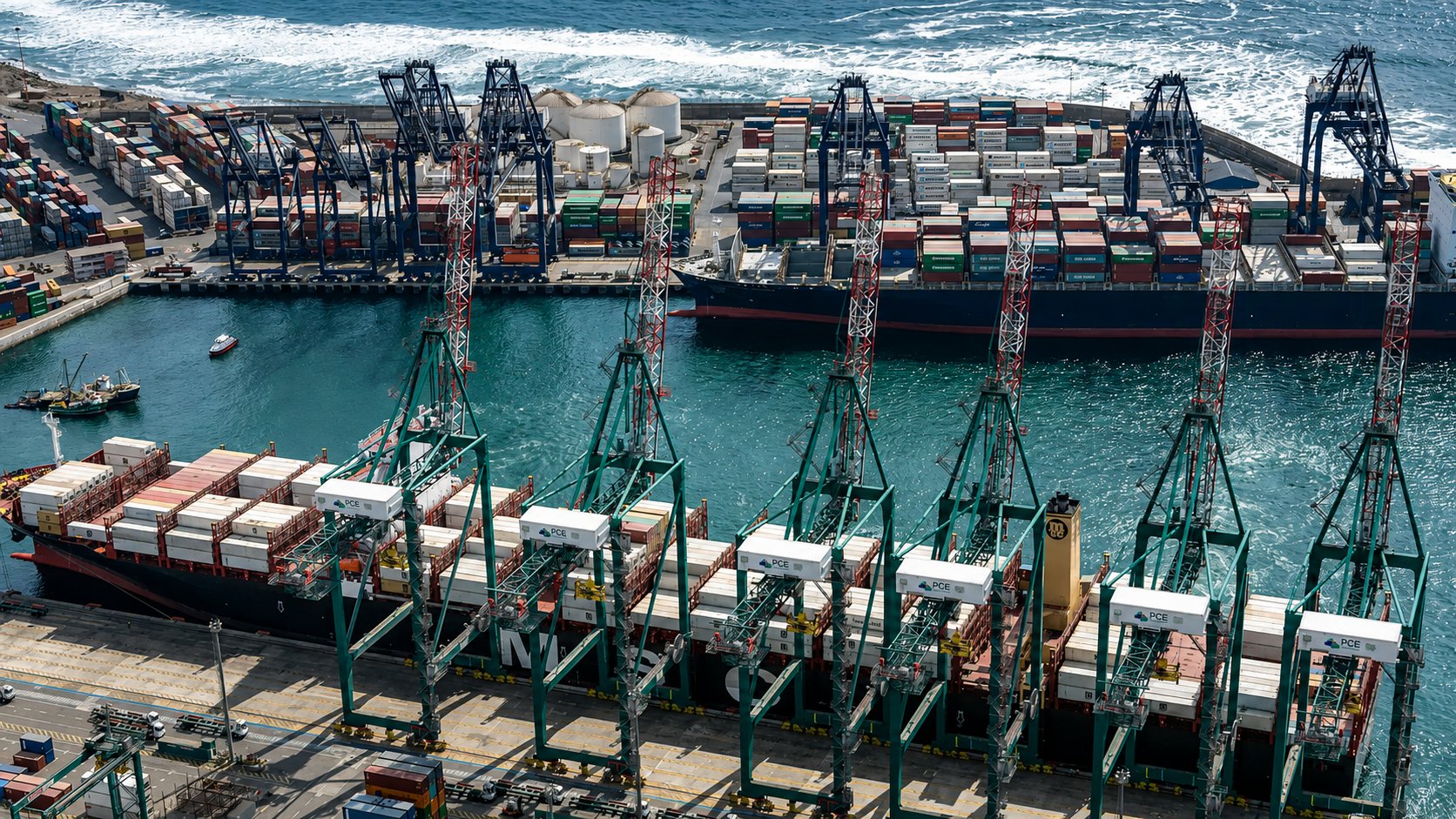
Chile shipped $19 billion in goods to the U.S. in 2025, up 15 percent, and outside the copper that moves in bulk, the containerized trade is built for the West Coast: salmon and seafood, fresh fruit led by cherries, grapes, blueberries and avocados, bottled wine, and lumber. Most of it qualifies for duty-free entry under the U.S.-Chile Free Trade Agreement, in force since 2004. San Antonio is Chile's largest container port and sits beside Valparaiso on the central coast, both sailing straight up the Pacific to Los Angeles with no Panama Canal transit.
AEEM Shipping manages the full move: FCL bookings and LCL consolidations out of San Antonio and Valparaiso, air cargo from Santiago, customs clearance handled by licensed customs brokers while your freight is on the water, and same-day drayage at every San Pedro Bay terminal on arrival. One point of contact from Chilean origin to U.S. door, tracked in real time with 24/7 dispatch.
.jpg)
Origin port to final door, managed by one team.
.svg)
FCL and LCL container shipping from San Antonio and Valparaiso on direct Pacific services to LA and Long Beach.
Learn More ➔.svg)
Same-day and next-day pickup at every LA and Long Beach terminal, with reefer capability for fruit and seafood, plus pre-pull and overweight equipment.
Learn More ➔.svg)
\TSA/IAC certified air cargo from Santiago for fresh salmon, cherries in peak season, and time-critical shipments to LAX.
Learn More ➔
Entry filing, ISF, U.S.-Chile FTA documentation, and FDA prior notice for seafood and food products, handled by licensed customs brokers.
Learn More ➔
Chilean freight runs on the calendar. The fruit season peaks from December through March, when cherries, grapes and blueberries fill reefers northbound and vessel space out of San Antonio tightens fast, salmon moves year-round frozen by ocean and fresh by air, wine ships steadily to a California market that anchors U.S. demand, and lumber rounds out the dry side. Direct Pacific services reach San Pedro Bay in roughly 13 to 17 days, and for perishables that transit is the product: a week saved against an East Coast routing is a week of shelf life.
Cold chain is the discipline that decides this lane. Reefers need booking early in peak season because the fruit rush takes the equipment, FDA-registered facilities and prior notice have to be filed before arrival for seafood and food, and the FTA's duty-free entry rides on a complete origin file. We lock reefer space ahead of the season, build the filings into the booking, clear entries through licensed customs brokers while the freight is on the water, and run cold chain drayage on arrival with appointments set off the vessel ETA so produce moves the day it lands.
Port list line
San Antonio · Valparaiso
Straight answers on freight from Columbia to the U.S.
Direct Pacific services from San Antonio and Valparaiso reach LA and Long Beach in roughly 13 to 17 days port to port, with no Panama Canal transit. Add time for customs clearance and drayage to final delivery.
Most qualifying Chilean-origin goods enter duty-free under the U.S.-Chile Free Trade Agreement, in force since 2004, provided the origin documentation is complete and the goods meet the agreement's rules of origin. We review eligibility before your cargo ships, with entries handled by licensed customs brokers.
Rates move with container size, season, fuel surcharges, and equipment, and reefer space prices up sharply during the December to March fruit season. Send us the origin, cargo, and volume and we return a real all-in quote covering ocean freight, destination charges, and delivery.
If your cargo fills most of a 20-foot container, FCL is usually faster and cheaper per unit. Smaller volumes move LCL through consolidation at San Antonio and Valparaiso, which typically adds one to two weeks over FCL because of consolidation at origin and deconsolidation on arrival.
Yes. Fruit and seafood require an FDA-registered facility and a prior notice filing before arrival, perishables ride reefers with unbroken cold chain from loading to delivery, and wine requires TTB importer permits and label approvals. We coordinate the filings, lock reefer space ahead of peak season, and run cold chain drayage on arrival, with entries handled by licensed customs brokers.
Our own drayage network picks up at every San Pedro Bay terminal, with pre-pull and overweight capability, then delivers to your door or transloads in the Inland Empire.