.png)
Call Us 24/7/365
+1 (818) 600-0008Freight between Los Angeles and Canada, coordinated as one move. Pickup, the border,
and final delivery handled by a single team, whether your load is heading north to Toronto
or south to a SoCal distribution center.
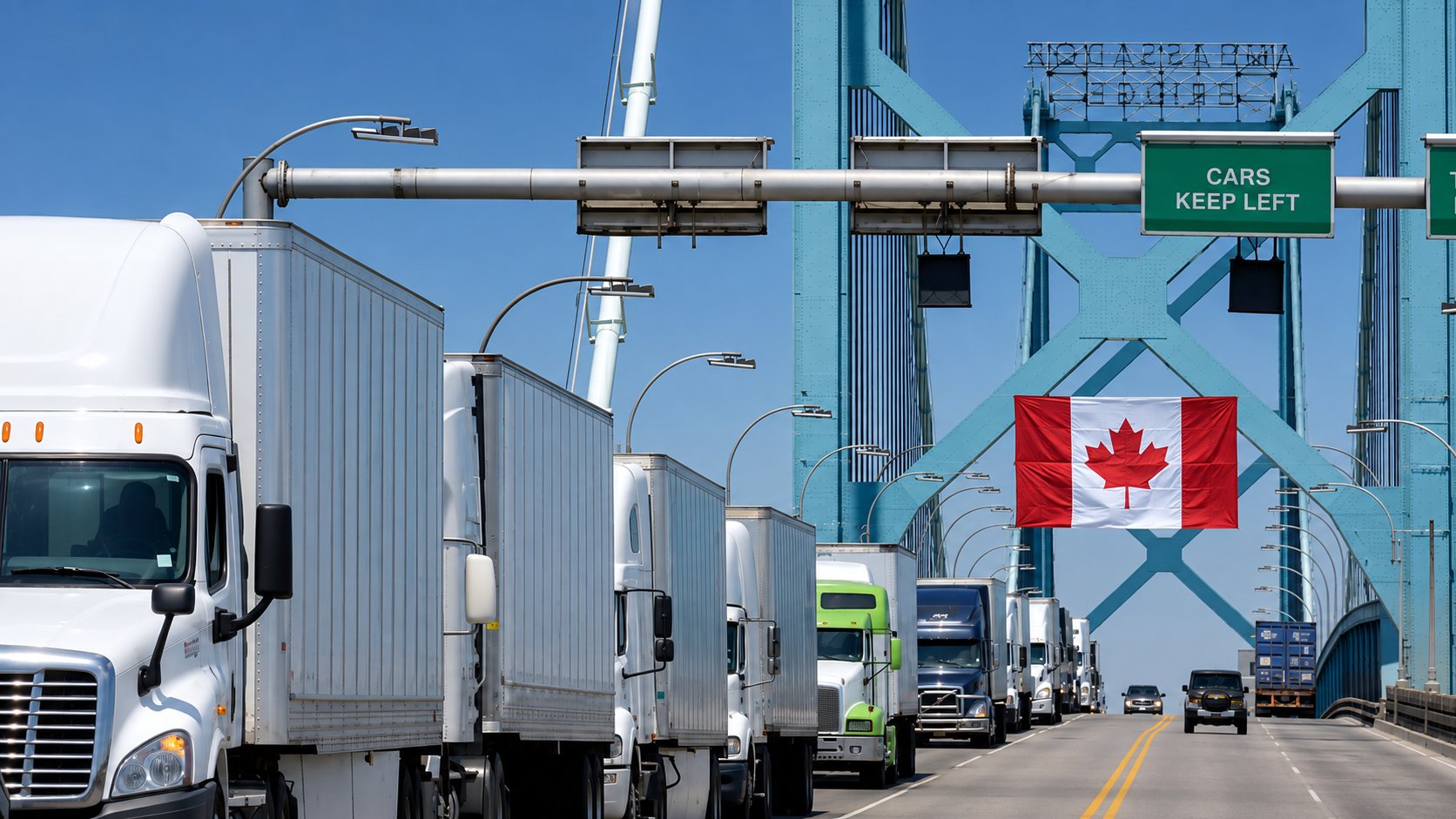
The United States and Canada run the largest bilateral trade relationship in the world, and almost all of it moves by truck and rail. The Detroit-Windsor corridor alone handles roughly 30 percent of truck-borne trade between the two countries, more than $270 million in goods every day. For a Los Angeles shipper, that scale is an advantage. The lanes are mature, capacity is deep, and transit is predictable when the border work is done right.
AEEM coordinates the full move from Los Angeles County origins to destinations across Ontario, Quebec, British Columbia, and the Prairies, and the reverse. Machinery, lumber, food products, and manufactured goods make up the bulk of the corridor, and each has its own border profile. We plan the crossing, the paperwork sequence, and the delivery window before the truck leaves the dock.
Booked, crossed, and delivered by one team.

Full truckload between Los Angeles and Canada, one trailer and one team from pickup to delivery.
Learn More ➔
Storage, transload, and distribution coordination on the LA end, positioned near the port complex and major corridors
Learn More ➔.svg)
Time-critical loads between LAX and Toronto, Montreal, or Vancouver when the truck transit window is too long.
Learn More ➔
Entry documentation prepared and sequenced ahead of the crossing, handled by licensed customs brokers on both sides of the border.
Learn More ➔
Canada to US. Southbound freight from Ontario and Quebec runs the 401 to the Detroit-Windsor corridor, where the newly opened Gordie Howe International Bridge added a six-lane, freeway-to-freeway crossing alongside the Ambassador Bridge in July 2026. Toll-sensitive 401 traffic also runs the Blue Water Bridge at Sarnia, which has recently carried the highest single-crossing truck volumes on the border. Western Canada freight crosses at Pacific Highway below Vancouver and runs I-5 south into Los Angeles.
US to Canada. Northbound loads out of Los Angeles run I-15 and I-90 toward Pacific Highway for British Columbia, or the southern transcon toward Detroit-Windsor and Buffalo-Peace Bridge for Ontario and Quebec. We decide through-trailer versus border transload per load, and bonded movement is available when entry happens inland rather than at the crossing.
Crossing list
Transit times, crossings, and what the border actually requires.
Door to door transit from Los Angeles to Toronto typically runs 4 to 6 days by truck, depending on service level and border timing. Intermodal rail runs longer but at a lower cost on this lane. We confirm the transit window when we quote the load.
Both, depending on the load. Through-trailer keeps freight on one trailer from origin to destination and is the default for most commercial loads. Transload at the border makes sense in specific carrier or equipment situations. We make that call per shipment and tell you before pickup.
Many goods qualify for preferential duty treatment under USMCA when they meet the agreement's origin rules and are properly certified. Qualification depends on your product and its inputs, and your customs broker confirms eligibility per shipment. We coordinate the documentation flow so certified goods get the treatment they qualify for.
Many goods qualify for preferential duty treatment under USMCA when they meet the agreement's origin rules and are properly certified. Qualification depends on your product and its inputs, and your customs broker confirms eligibility per shipment. We coordinate the documentation flow so certified goods get the treatment they qualify for.
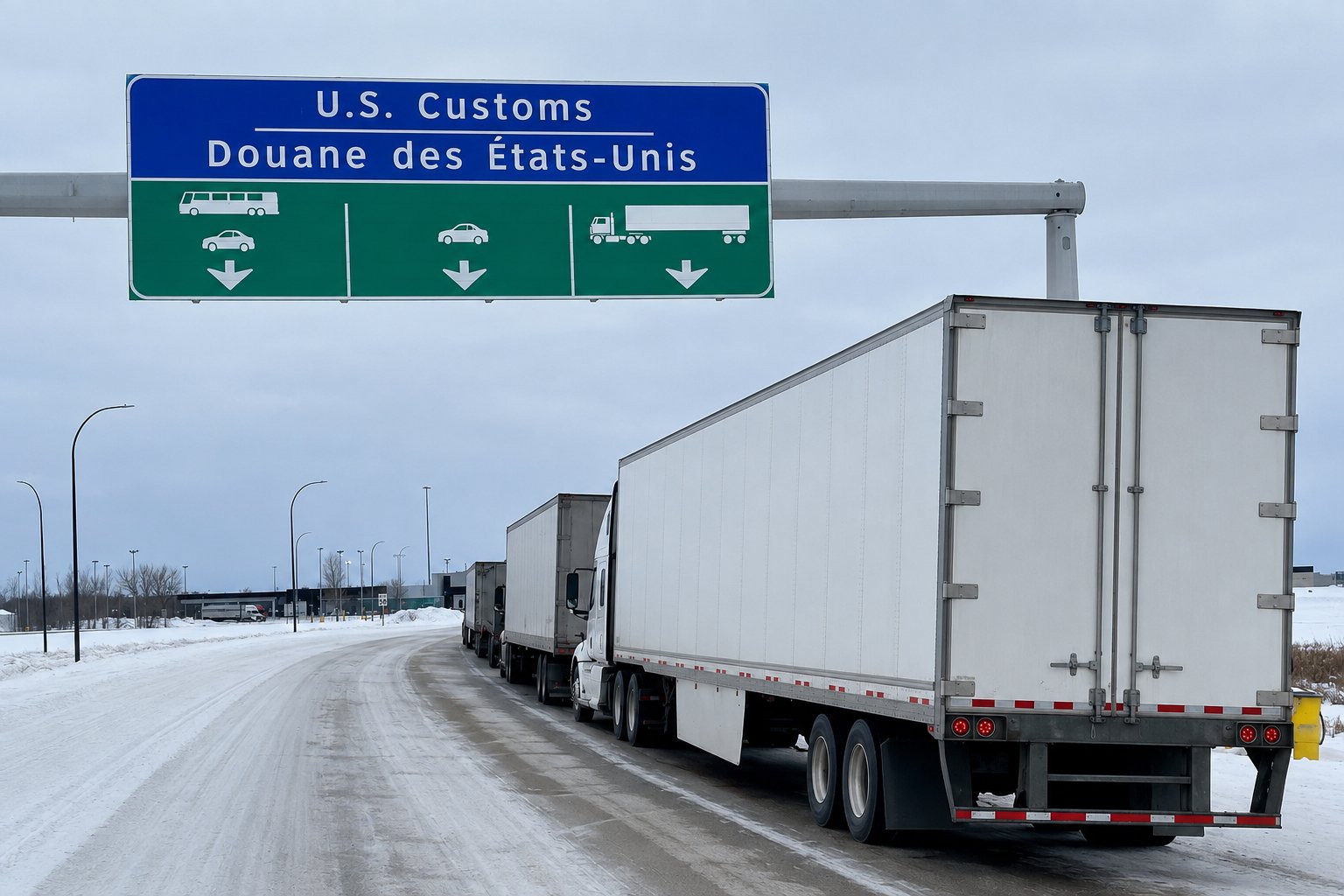
Detroit-Windsor is the primary corridor for Ontario and Quebec freight, using the Gordie Howe or Ambassador bridge, with the Blue Water Bridge at Sarnia as the alternate. Buffalo-Peace Bridge serves eastern lanes, and Pacific Highway at Blaine handles British Columbia. Crossing selection is part of route planning, not an afterthought.
Yes. Many customers run freight in both directions, and we coordinate round-trip and backhaul programs across the border. One point of contact covers both legs, which simplifies scheduling and keeps documentation consistent.